By Frank & Nicolaas Schenk
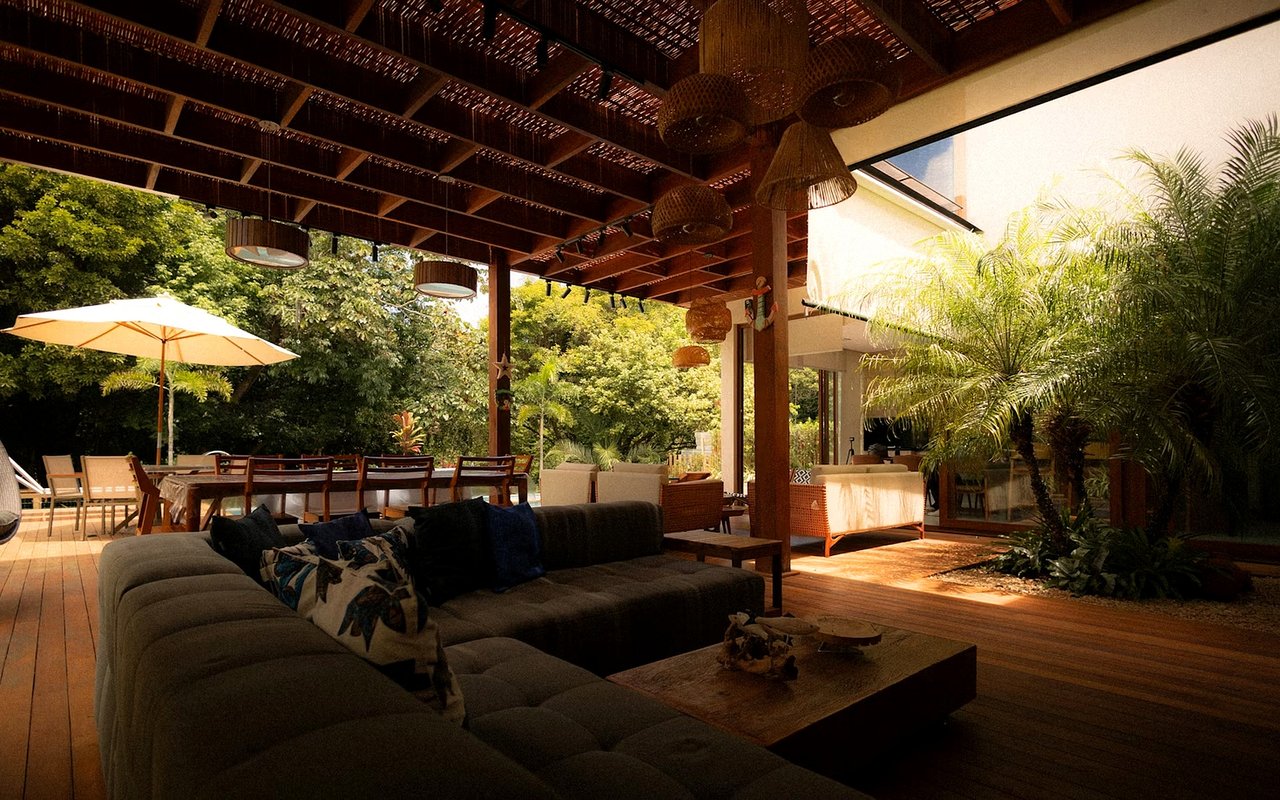
There is a particular kind of luxury that only exists in certain places on earth, where the architecture doesn't simply sit within its natural setting but becomes inseparable from it. In Kūkiʻo, one of the Big Island's most compelling resort communities on the Kona-Kohala Coast, this principle isn't aspirational — it's architectural fact. The homes here are designed to dissolve the boundary between inside and outside, turning the volcanic coastline, tropical landscaping, and year-round trade winds into extensions of your living space.
If you're a Kūkiʻo homeowner or considering a property within this wondrous community, understanding how to design and optimize that indoor-outdoor flow is essential. It's not simply about opening a door to a patio. It's about creating a home that breathes with the land — where every room transitions naturally into the surrounding environment and where the outdoor experience feels as intentional as any interior room. Done well, this kind of design becomes the defining feature of a Kūkiʻo residence.
The principles of seamless indoor-outdoor living can be applied thoughtfully to elevate your daily life on the Big Island. Here's what you need to know.
Key Takeaways
-
Indoor-outdoor flow in Kūkiʻo homes relies on architectural elements, material continuity, and intentional spatial planning.
-
Glass wall systems, pocket doors, and retractable panels are among the most effective tools for eliminating visual and physical boundaries between interior and exterior spaces.
-
Matching flooring materials from inside to outside is one of the most impactful and cost-effective ways to create a seamless transition.
-
Landscaping, lighting, and outdoor furnishings should be treated as extensions of the interior design rather than separate considerations.
-
Kūkiʻo's coastal microclimate, including prevailing winds and sun orientation, should guide how you position and design your transition zones.
The Architecture of Disappearing Walls
The foundation of indoor-outdoor flow begins with how the structure opens up. In Kūkiʻo, where the gorgeous climate allows for open-air living nearly year-round, the right wall systems can transform the way a home functions entirely. Traditional sliding glass doors are a baseline, but the homes here are designed to achieve something far more dramatic.
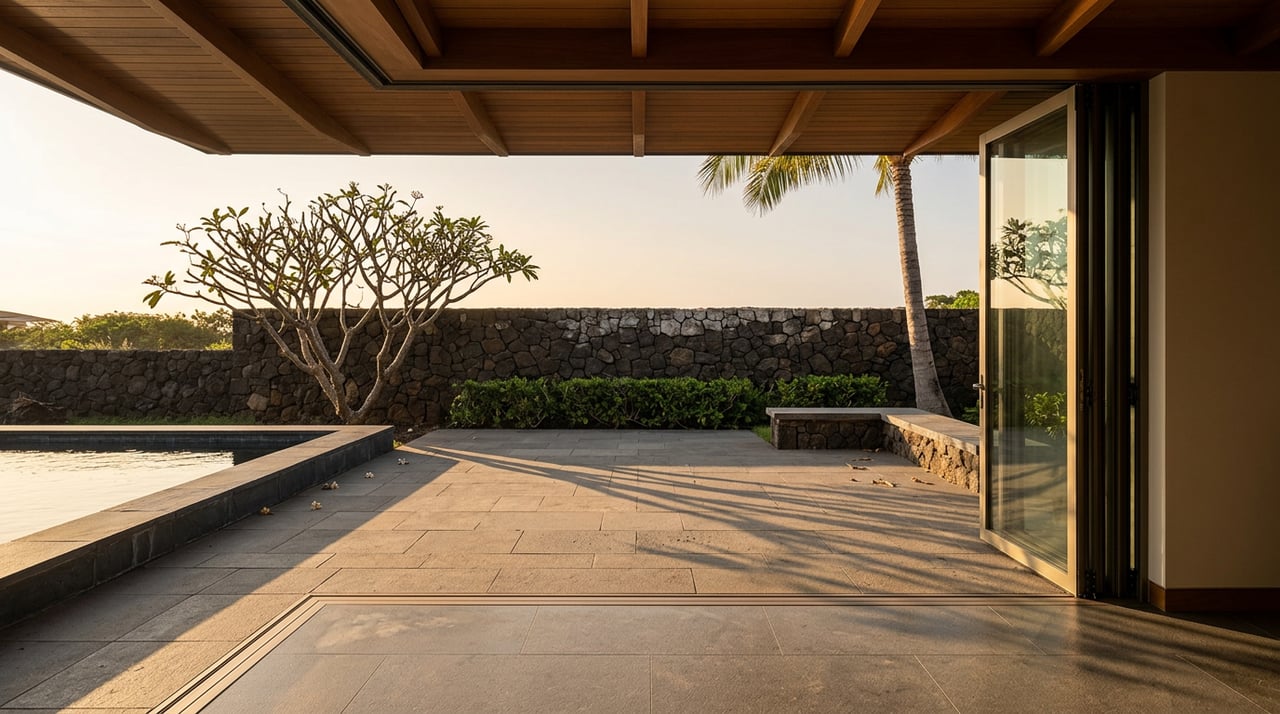
Pocket door systems that slide fully into the wall allow an entire side of a room to open completely, so that the great room, kitchen, or primary suite extends outward without any visual interruption. Bi-fold and multi-panel accordion glass doors offer a similar effect, folding away cleanly to create a threshold-free opening that invites the outside in. When these systems are paired with level flooring on both sides, there is no moment where you feel the transition from inside to outside.
Retractable screen systems have become increasingly popular in Kūkiʻo and across the Kona-Kohala Coast, allowing homeowners to filter out insects and wind without sacrificing the open, airy feel. These systems are nearly invisible when rolled away and can cover expansive openings without breaking the visual line of the home.
Pocket door systems that slide fully into the wall allow an entire side of a room to open completely, so that the great room, kitchen, or primary suite extends outward without any visual interruption. Bi-fold and multi-panel accordion glass doors offer a similar effect, folding away cleanly to create a threshold-free opening that invites the outside in. When these systems are paired with level flooring on both sides, there is no moment where you feel the transition from inside to outside.
Retractable screen systems have become increasingly popular in Kūkiʻo and across the Kona-Kohala Coast, allowing homeowners to filter out insects and wind without sacrificing the open, airy feel. These systems are nearly invisible when rolled away and can cover expansive openings without breaking the visual line of the home.
What To Look For in a Wall Opening System
-
Full-retraction pocket doors that disappear entirely into the wall cavity rather than stacking along the opening.
-
Flush floor tracks or track-free pivot systems that eliminate any tripping hazard at the transition point.
-
UV-rated or thermally broken glass that manages heat gain from the sun without requiring heavy tinting.
-
Weatherproofing rated for coastal environments, since salt air and occasional winter swells along the Big Island's west coast demand hardware built to specific standards.
-
Motor-driven systems for large-scale openings, which make daily operation effortless and ensure consistent performance over time.
Flooring as a Connective Thread
One of the most powerful and often underestimated design strategies in a Kūkiʻo home is the use of continuous flooring material from the interior through to the exterior lanai or terrace. When the same stone, tile, or concrete runs uninterrupted across the threshold, the eye does not register where the house ends and the outdoor space begins. It is a simple intervention with a profound effect on how spacious and cohesive a home feels.
Porcelain tile that mimics natural lava rock or coral stone is a popular choice for this reason. It holds up beautifully against the elements, requires minimal maintenance, and connects visually to the surrounding volcanic landscape. Honed or brushed-finish natural stones, such as basalt and travertine, are also well-suited to this climate, provided they are sealed appropriately for outdoor exposure.
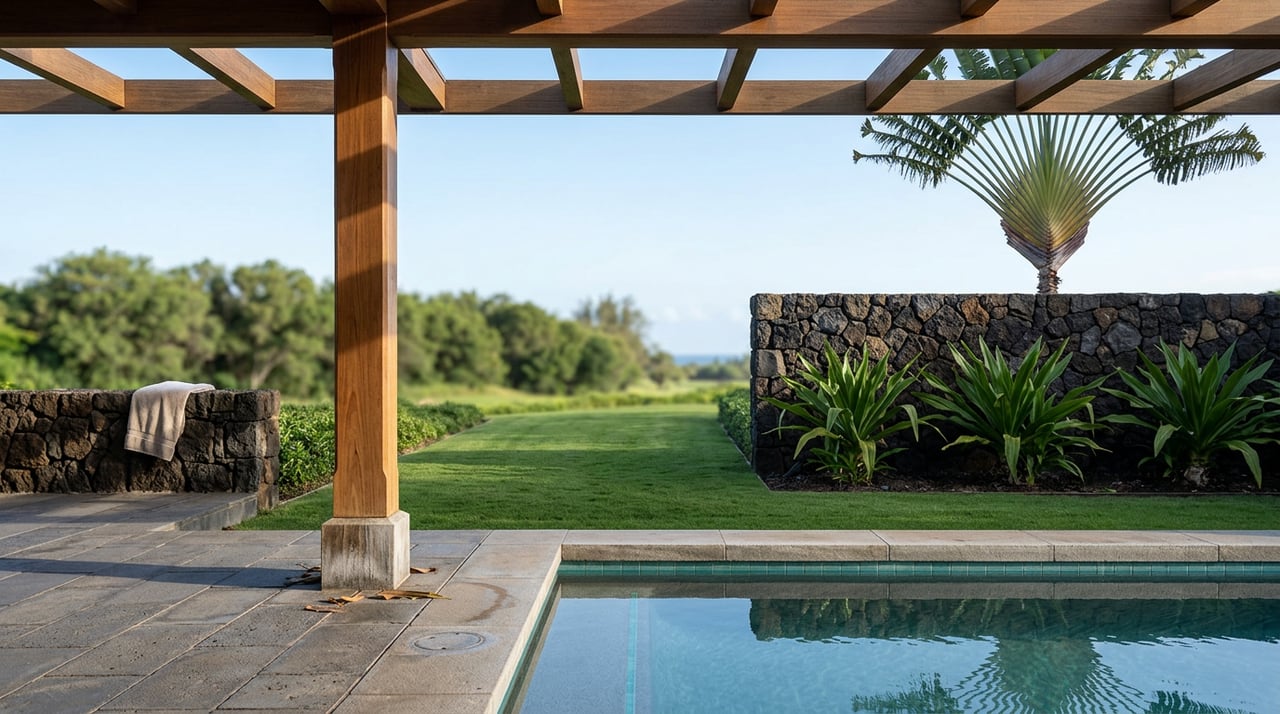
What matters most is consistency in scale and tone. A large-format tile that reads as elegant indoors shouldn't shrink to a completely different format outdoors. Carrying the same tile or a closely related material through the entire space, including around the pool deck and into the outdoor kitchen or dining area, creates a sense of unity that makes the property feel much more expansive and carefully considered.
Porcelain tile that mimics natural lava rock or coral stone is a popular choice for this reason. It holds up beautifully against the elements, requires minimal maintenance, and connects visually to the surrounding volcanic landscape. Honed or brushed-finish natural stones, such as basalt and travertine, are also well-suited to this climate, provided they are sealed appropriately for outdoor exposure.
What matters most is consistency in scale and tone. A large-format tile that reads as elegant indoors shouldn't shrink to a completely different format outdoors. Carrying the same tile or a closely related material through the entire space, including around the pool deck and into the outdoor kitchen or dining area, creates a sense of unity that makes the property feel much more expansive and carefully considered.
Materials That Work Best in Kūkiʻo's Coastal Environment
-
Porcelain tile rated for outdoor use, which resists moisture, UV fading, and the mild abrasion of barefoot traffic from the pool.
-
Honed basalt or lava stone, which is native to the Big Island and resonates with the landscape's volcanic origin.
-
Sealed travertine in a non-slip finish, which stays relatively cool underfoot even in direct sunlight.
-
Concrete overlays with a textured finish, which offer a custom look and can be matched precisely to interior coloring.
-
Ipe or teak decking in raised areas, which adds warmth and works well in shaded lanai sections where water drainage is managed properly.
Designing the Outdoor Living Zones
The outdoor spaces for your Kūkiʻo home deserve the same level of intentional design as any interior room. Treating the lanai as a furnished room, complete with defined zones for dining, lounging, and cooking, ensures that the outdoor area functions as a genuine extension of the home rather than an afterthought.
Begin by thinking about how the outdoor space will be used. A generous covered lanai adjacent to the kitchen creates a natural flow for entertaining, where guests move easily from cocktails inside to dining al fresco without a disruption in experience. A separate sunning terrace near the pool, framed with low landscaping and furnished with chaise lounges, functions as a distinct room, even without walls.
Shade structures play a significant role in making outdoor zones usable throughout the day. Motorized louvered pergolas allow you to control the amount of sun and airflow in real time, so the outdoor living area stays comfortable whether it's high noon or early evening. Sail shades and tensile canopies offer a more sculptural option, adding architectural interest while doing the practical work of protecting against direct sunlight.
Begin by thinking about how the outdoor space will be used. A generous covered lanai adjacent to the kitchen creates a natural flow for entertaining, where guests move easily from cocktails inside to dining al fresco without a disruption in experience. A separate sunning terrace near the pool, framed with low landscaping and furnished with chaise lounges, functions as a distinct room, even without walls.
Shade structures play a significant role in making outdoor zones usable throughout the day. Motorized louvered pergolas allow you to control the amount of sun and airflow in real time, so the outdoor living area stays comfortable whether it's high noon or early evening. Sail shades and tensile canopies offer a more sculptural option, adding architectural interest while doing the practical work of protecting against direct sunlight.
Creating Defined Outdoor Rooms
-
Position a covered dining area directly adjacent to the kitchen or great room to minimize carrying distances and encourage flow.
-
Use outdoor rugs, level changes, or low planters to define individual zones within a large terrace, giving each area a sense of purpose and enclosure.
-
Select outdoor furniture with the same intentionality as interior pieces, choosing materials like teak, powder-coated aluminum, and solution-dyed acrylic fabric that hold up well to the coastal environment.
-
Layer lighting at multiple heights, including path lighting, uplighting in the landscaping, pendant lighting over the dining area, and candles or fire features for an elegant ambiance in the evening.
Landscaping as Design
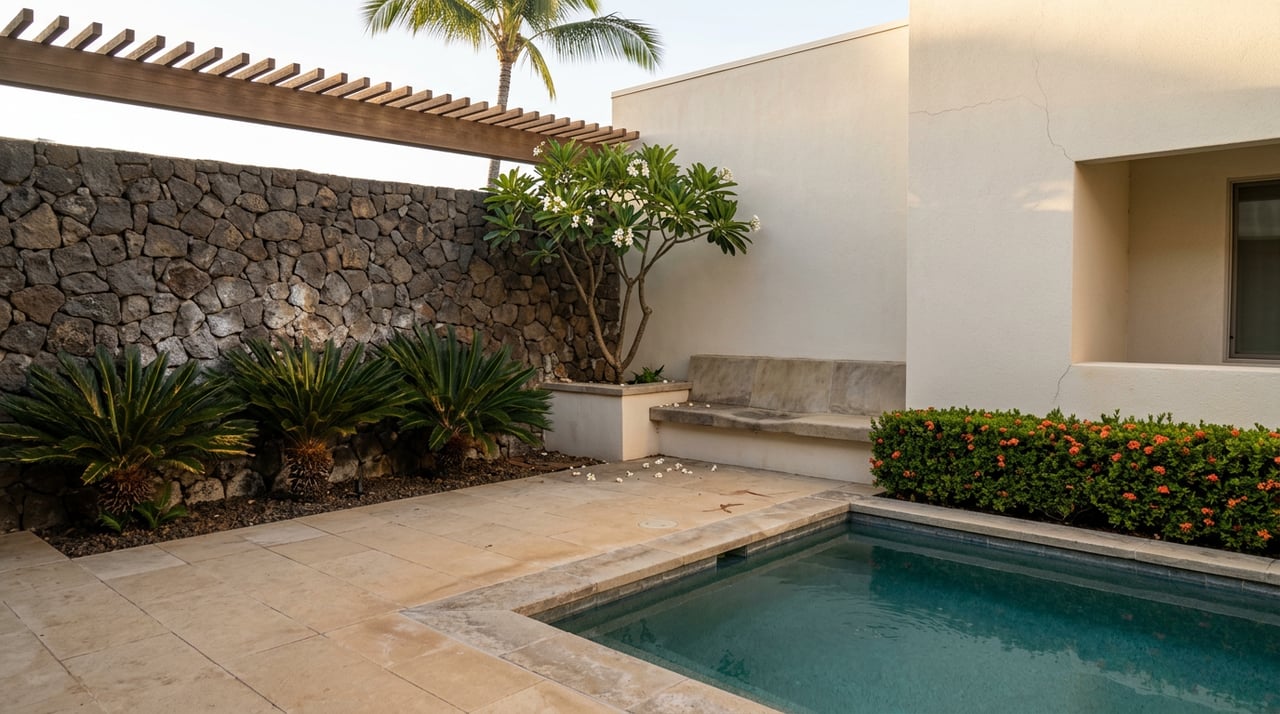
In a Kūkiʻo home where the walls open completely, the landscaping immediately outside becomes part of the room. When a guest stands inside the great room looking out through fully retracted glass doors, the tropical plantings in the foreground, the lava rock features in the middle ground, and the ocean or golf course view beyond are all part of the spatial experience.
Work with a landscape designer who understands the Big Island's native and adaptive plants, since the right species contribute to the visual composition without requiring intensive maintenance. Low-canopy plantings, such as ornamental grasses, bromeliads, and ti plants, frame the view without blocking it. Mature palms create vertical interest and provide filtered shade on the terrace. Native lava rock features echo the geological character of Kūkiʻo's coastline and ground the design in its place. Water features — positioned in the sightline from an interior living space — create a visual and acoustic connection between inside and outside that is hard to replicate.
Work with a landscape designer who understands the Big Island's native and adaptive plants, since the right species contribute to the visual composition without requiring intensive maintenance. Low-canopy plantings, such as ornamental grasses, bromeliads, and ti plants, frame the view without blocking it. Mature palms create vertical interest and provide filtered shade on the terrace. Native lava rock features echo the geological character of Kūkiʻo's coastline and ground the design in its place. Water features — positioned in the sightline from an interior living space — create a visual and acoustic connection between inside and outside that is hard to replicate.
Landscaping Principles for Kona-Kohala Coast Homes
-
Choose plants rated for coastal salt exposure and the dry leeward conditions of the Big Island's west side.
-
Use layered plantings at varying heights to create depth and frame views without blocking them.
-
Incorporate native lava rock, smooth river rock, or crushed coral as ground cover to reduce irrigation needs and connect to the local geology.
-
Position taller palms or trees to provide afternoon shade on the west-facing lanai without obstructing the primary ocean or mountain sightlines.
FAQs
What Makes Kūkiʻo Homes Particularly Well-Suited for Indoor-Outdoor Living?
Kūkiʻo sits on the Kona-Kohala Coast in one of the driest, sunniest microclimates in Hawaii, where rainfall is minimal and the trade winds provide natural cooling for most of the year. This climate means that fully open living is comfortable for the vast majority of the year. The combination of the climate, the views, and the quality of construction makes indoor-outdoor flow a core feature of life here.
What Is the Best Way To Light an Outdoor Living Space at a Kūkiʻo Home?
Layered lighting is the most effective approach, combining ambient, task, and accent sources at different heights. Path and stair lighting handle navigation. Uplighting in the landscaping creates depth and drama after dark. Pendant or overhead lighting in the dining area provides functional illumination for meals. Fire features like a gas fire pit or fire bowls add warmth and atmosphere. All fixtures should be rated for damp locations and constructed of marine-grade or corrosion-resistant materials.
Does Indoor-Outdoor Design Add Measurable Value to a Kūkiʻo Property?
In a resort community like Kūkiʻo, the quality of outdoor living is one of the primary drivers of property value and buyer appeal. Homes where the indoor-outdoor connection is seamless, well-furnished, and oriented to capture the best views and breezes consistently attract significant buyer interest. Investments in high-quality wall systems, continuous flooring, and thoughtful landscaping tend to have a strong return in this market.
Your Kūkiʻo Home, Fully Realized
The magic of living in Kūkiʻo lies in how completely the boundary between the built environment and the natural one can dissolve. When a home is designed with landscaping that is as carefully considered as the interior furnishings and when the outdoor rooms are as livable as the ones inside, the entire property functions at a higher level. It becomes not just a place to stay but a place to live in the fullest sense of the word.
As resort property specialists, we can guide you through every aspect of buying, selling, or renovating within beautiful Kūkiʻo. Whether you're evaluating a property's existing indoor-outdoor design or envisioning a full transformation before selling, our team is here to help you make the most of one of the most extraordinary places to own a home in the world. Reach out to us, Frank & Nicolaas Schenk, to start the conversation.
As resort property specialists, we can guide you through every aspect of buying, selling, or renovating within beautiful Kūkiʻo. Whether you're evaluating a property's existing indoor-outdoor design or envisioning a full transformation before selling, our team is here to help you make the most of one of the most extraordinary places to own a home in the world. Reach out to us, Frank & Nicolaas Schenk, to start the conversation.