A woman who identifies herself only as a full-time Mauna Kea resident left a review on a tennis-travel site earlier this year that offers a resident's perspective on the resort's renovation. She plays the Seaside Racquet Club courts on a regular basis and calls the facility "the premium tennis and pickle ball facility in the entire state." No mention of a gala, a package rate, or a reopening date. Just a neighbor describing where she plays.
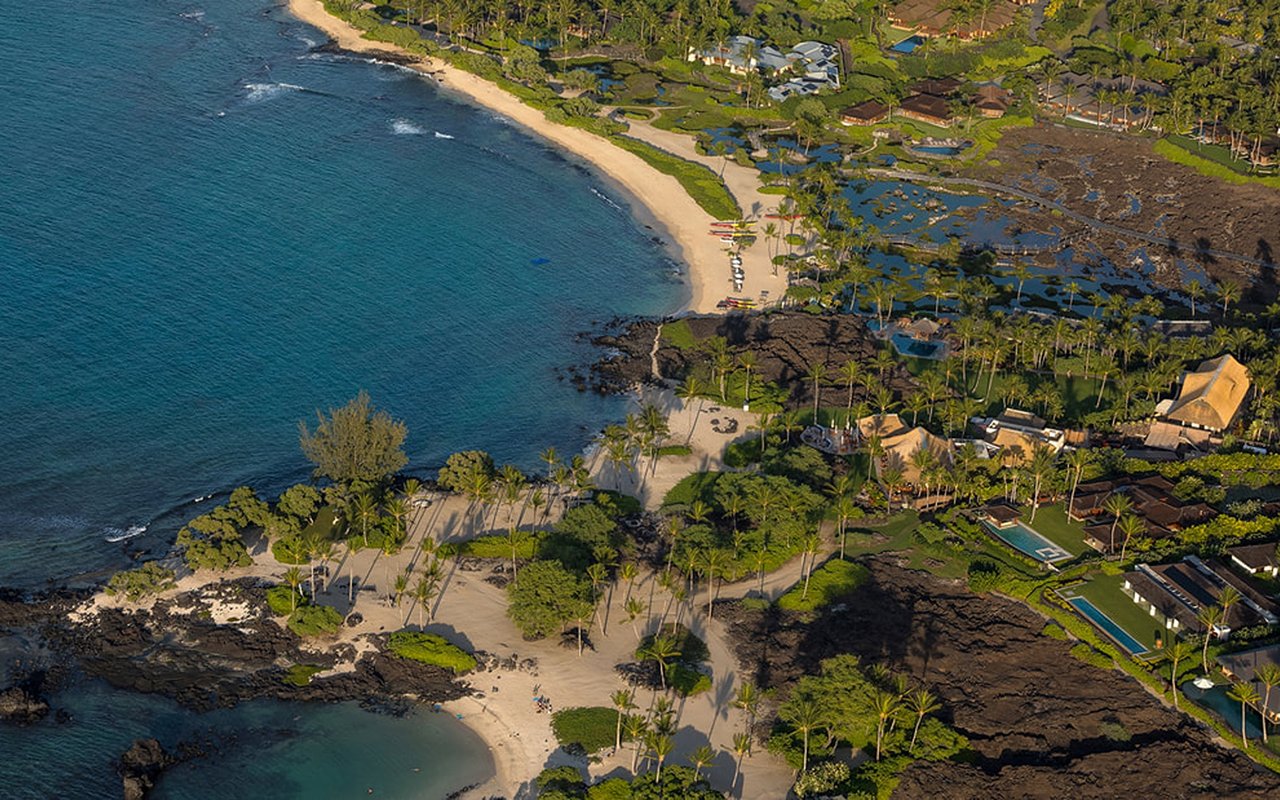
That gap matters. Nearly every piece of coverage about Mauna Kea Resort this year has been aimed at someone booking a stay: rates starting near $1,300 a night, a four-night minimum to unlock gala tickets, a June reopening weekend timed to the 60th anniversary. All of that is real. But if you already live inside the gates at Kauna'oa, Fairways, Hapuna Estates, or The Uplands, the renovation isn't an event you book. It's the version of the resort you now walk out your door into, and it has been changing for longer than the press releases suggest.
The Golf Course Reopened Before Anyone Was Writing About the Rest of It
The most-covered number attached to this renovation is the dollar figure, and even that has moved. When the project was first announced, Prince Resorts pegged it at roughly $180 million. By the time the hotel finished its guest rooms and dining rooms in February 2026, resort materials were still using that same $180 million-plus figure. By May, trade coverage in Pacific Business News and Hoodline had revised the number upward, describing the finished project as a "nearly $240 million" revitalization. What residents got, well before any of those headlines ran, was their golf course back.
The Mauna Kea Golf Course reopened the week of Christmas in 2024, more than a year before the hotel-wide renovation was declared complete. Robert Trent Jones Jr. led the redesign, working from his father's original 1964 routing, which means the course now carries the unusual distinction of having been touched by three generations of the same design family: Robert Trent Jones Sr., his son Rees Jones, and now Robert Trent Jones Jr. The fairways and greens were replanted in seashore paspalum, a turf better suited to the tropical climate, and the famous over-the-ocean third hole was restored rather than reimagined. If you play regularly, you've had a full season and a half to get used to the new bunkering while out-of-state golf media was still calling it new.
Eleven Courts, Not Seventeen
At the Seaside Racquet Club, the distinction between new courts and new ways to use existing ones matters. Resort press releases describe the club as home to nine oceanfront tennis courts plus eight new pickleball courts, a phrasing that implies seventeen total playing surfaces. Court-finder listings tell a different story. Pickleheads, the national pickleball directory, lists the Seaside Racquet Club as eleven outdoor hard courts total, with pickleball lines painted directly onto the existing tennis courts rather than built as separate infrastructure.
Both things can be true at once. The resort added pickleball as a sport option to courts that already existed, rather than pouring eleven new courts of concrete. For a full-time resident, the practical takeaway isn't the total court count, it's that tennis and pickleball are now competing for the same eleven surfaces during peak hours. If you've booked a court for a 4 p.m. tennis lesson only to find the lines double-striped and a pickleball round robin already underway, that's the arithmetic behind it.
Two Restaurants, One Kitchen, Two Different Nights
Dining is where the renovation shows up in the most literal, daily way. Hau Tree, the beachfront restaurant that's carried the resort's lunch crowd for decades with its Ovaltine Froth and Fredrico cocktail, now runs a second identity after dark. By day it's still burgers, Baja fish tacos, and the Saturday clambake tradition that's been a fixture at Mauna Kea for years. By night the same space becomes Hau Tree Cantina, serving regional Mexican dishes drawn from Sinaloa, Sonora, Campeche, Oaxaca, and the Yucatan. It's the same tables and the same gazebo bar on Kauna'oa Bay, just a different menu depending on when you show up.
Manta, the resort's signature restaurant, kept its Pacific Rim identity under Chef Bryan Nagao but shifted toward a farm-to-table sourcing model that draws on Hawaii Island farmers and fishermen directly. Copper Bar, tucked between the two, still does what it's always done: tapas, handcrafted cocktails, and enough oceanfront seating that reservations aren't strictly necessary if you're flexible on timing. For residents close enough to walk over, none of this required a plane ticket or a package rate.
The Garden Came Before the Spa
Long before The Spa at Mauna Kea opened this spring with its eleven treatment rooms and adults-only infinity pool, the resort quietly relocated something older: the 'ulu, or breadfruit tree, believed to have been planted during the hotel's original 1965 construction. That relocation marked the start of what became the 28,000-square-foot Ulu Garden, now the source of much of the produce showing up on Manta's and Hau Tree's plates. It's a small detail buried under the spa headlines, but it's the kind of continuity that matters if you've watched this property for years. The tree that predates the hotel's first guest is still on the grounds, just in a different spot, feeding the same restaurants it always has.
Owners looking to use the spa and both hotels' amenities without paying hotel rates every visit can enroll in The Club at Mauna Kea, the resort's membership program. The discounted enrollment window runs through November for the following year, which is worth flagging now if you've been meaning to sign up and haven't gotten around to it.
A Trail That Only Half the Coast Bothers to Sign
The state's own description of the Ala Kahakai Trail along this stretch of coast is blunt: outside the Spencer-Puako section, most of it receives limited maintenance, has no signage, and requires caution near sea cliffs. That's the public trail experience most of the Kohala Coast lives with.
Mauna Kea Resort has built something different on its own section. The Ala Kahakai Discovery Walk spans roughly 3.5 miles from Mau'umae Beach to Hapuna, about seven miles round trip, and the resort has installed marked points of interest with QR codes that link to stories about the culture and natural history along the route. It's still the same technical, uneven coastal terrain the National Park Service describes for the trail's full 175-mile length, and the resort's own safety notes still warn hikers to stay clear of unstable cliff edges and to check conditions before heading past Wai'ula'ula Gulch when rain is possible. But it's an interpretive layer that doesn't exist anywhere else on this coastline, built by the resort for the people who walk it week after week, not for a single vacation stroll between two hotel pools.
What Changed, and for Whom
None of this reads like a single announcement. The golf course came back over a holiday week in 2024. The garden started with one relocated tree. The pickleball lines went down on courts that already existed. The restaurant that's served Ovaltine Froth for fifty years just started serving Oaxacan food after dark. Add it up and the resort that travel media is now describing as a $240 million transformation has actually been arriving in pieces, in the order that residents, not guests, would notice it.
The Mauna Kea Pro-Am has run every year since 1973. When the resort marked the golf course's 60th anniversary at the end of 2024, the same announcement noted the tournament was approaching its 52nd staging, on a course that looked different than it had a year before but still played the same coastline it always has. That's one way to describe most of what changed here this year. The renovation gave visitors a reason to book a room. It gave the people who already live here a slightly different version of the same daily routine, arriving quietly, one court, one garden bed, one menu at a time.
If you're weighing a move within the resort or curious what any of this means for property values in Kauna'oa, Fairways, or the Uplands, Schenk Properties has spent decades watching this coastline change in exactly this kind of detail. Contact us.