Walk the cart path between holes 13 and 14 at Kohanaiki before 7 a.m. and you'll likely see a groundskeeper on his knees at the edge of a small, still pool of water, pulling weeds out by hand. No machine touches these pools. A Hawaiian stilt, black and white with legs the color of bubblegum, may be picking through the shallows a few feet away, unbothered. This scene, repeated across more than 200 of these pools scattered through the course, is the actual reason Kohanaiki made news this spring. It has almost nothing to do with the six oceanfront holes that show up in every golf magazine spread.
In April 2026, Kohanaiki became the first golf course in Hawaii to earn Audubon International's Gold Signature Sanctuary certification, one of only 14 courses in the world to hold that status within a network of more than 2,000 Audubon-certified courses globally. The oceanfront holes that get photographed for course rankings aren't what earned the designation. The ponds most golfers walk past without a second look are.
The Photogenic Holes Aren't the Ones the Judges Cared About
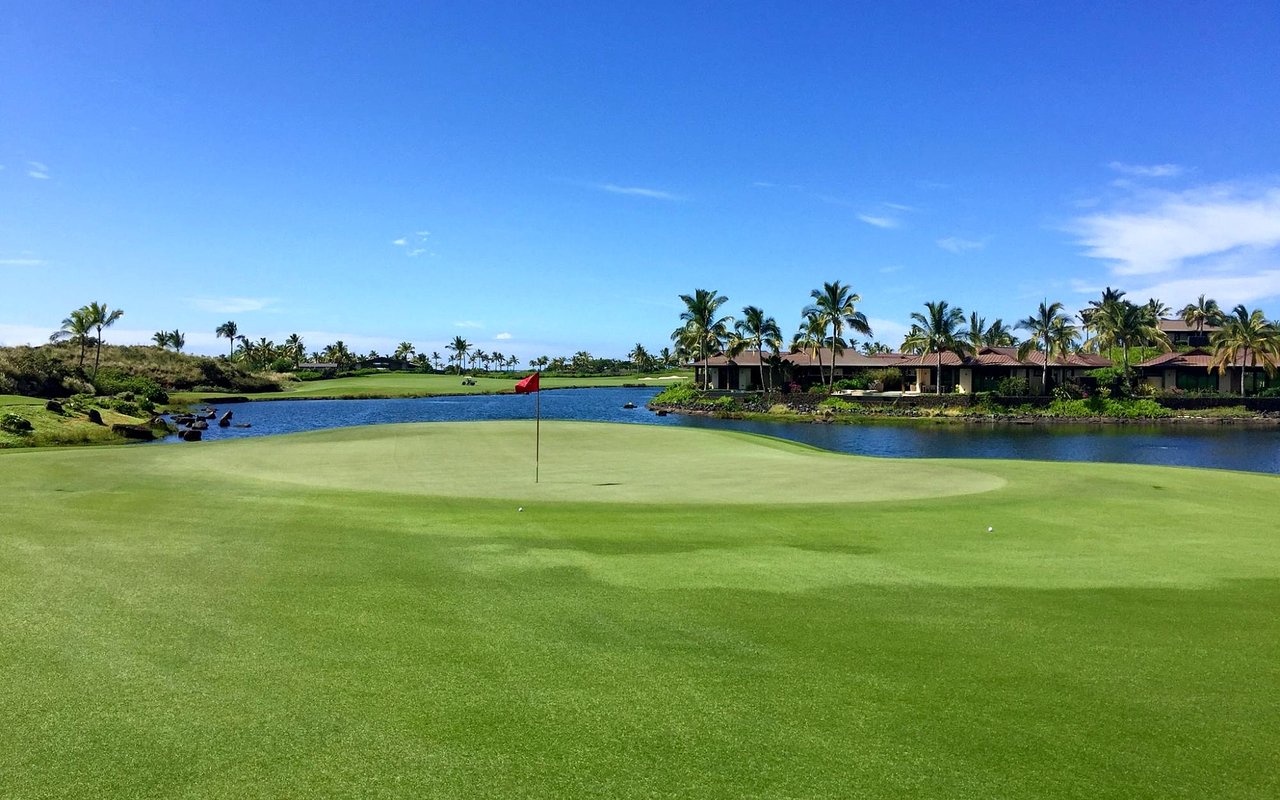
Kohanaiki's back nine runs along a mile and a half of Kona coastline, and the holes that trace that shoreline are the ones that show up in every ranking of Hawaii's best courses. But Audubon International's Gold Signature Sanctuary certification is built around a different set of criteria: comprehensive natural resource management plans, habitat enhancements, environmental monitoring, and verified sustainable practices sustained over time. Kohanaiki's citation specifically credits the restoration of its anchialine pond systems, dedicated habitat protection for the Hawaiian stilt, known locally as the ae'o, native and drought-tolerant landscaping, and long-term water quality monitoring.
Anchialine ponds are landlocked pools with a hidden connection to both groundwater and the sea, and they're one of Hawaii's most fragile ecosystems. They don't photograph the way an ocean-view fairway does. But they're the reason a global conservation organization put Kohanaiki in the same category as 13 other courses on Earth.
Two Hundred Ponds, No Machines Allowed
The scale of the pond system is easy to undersell. As Golf Course Industry reported, Kohanaiki's grounds crew is responsible for maintaining more than 200 protected anchialine ponds threaded through the property, and because machinery isn't permitted in or near them, the work of clearing invasive pickleweed and mosquito fish has to be done by hand. That labor has been going on for years, well before this year's certification, and it's paired with an irrigation system that pulls water from eight wells and processes it through reverse osmosis rather than draining a single aquifer source. Kohanaiki's Director of Golf Course Maintenance and Grounds, Luke Bennett, put the stakes plainly when the award was announced: protecting the ponds and the nesting grounds of the ae'o guides the club's stewardship every day, not just on inspection days.
The club has also brought in outside expertise over the years, including anchialine pond specialists from the University of Hawaii, to test water quality alongside the in-house grounds team. Pairing the crew's daily hand work with independent water testing gives the pond program a second set of trained eyes, and it reflects the care that went into earning the Audubon designation.
The Rocks Were There Before the Fairways Were
When Rees Jones designed the course, he didn't clear the property and start from a blank canvas. Fourteen Ahu, stone shrines used by early Hawaiian mariners to mark their position relative to the island, sit throughout the routing, and Jones built greens and holes around them instead of moving them. That decision, made more than a decade before anyone was talking about Audubon certification, tells you something about what kind of course this was designed to be from the start. The same shoreline carries the history of Kamehameha I, and the club's own materials point to petroglyphs and cultural landmarks along the coastline as part of what the property is stewarding, not just scenery around it.
It's worth noticing that the environmental story and the cultural story aren't separate at Kohanaiki. The same instinct that kept 14 sacred stone markers in play on a golf course kept 200 ponds alive rather than filled in for turf.
An Award That Usually Goes to Courses Before They Open
Here's the detail that makes this certification unusual. Audubon's Gold Signature Sanctuary program is typically associated with new developments, courses designed from the ground up with sustainability built into the blueprint before a single green is grassed. Kohanaiki's course opened for play in 2013. The certification came in 2026, thirteen years later. That gap matters. It means Kohanaiki didn't win this by getting the design right on paper. It won it by sustaining the actual practices, the hand-weeding, the pond monitoring, the habitat protection during nesting season, over more than a decade of daily operation. A design certification is a promise. What Kohanaiki has now is a track record.
The Club Calendar Runs on the Same Rhythm
None of this happens in isolation from the rest of club life. This past August, Kohanaiki held the inaugural Longboard, a three-day couples' member-guest golf event that ran two tournament rounds with breakfast at Kōnane Restaurant, stretching sessions at Pae Pae, and dinners rotating between Kōnane and the Beach Restaurant. The club's food and wine program is led by Master Sommelier Andy Myers, whose presence at a private club community on the Big Island is itself a signal of how seriously Kohanaiki treats its dining as part of the overall experience rather than an afterthought to golf.
The point isn't that Kohanaiki has good food and a nice tournament calendar. Plenty of resort clubs do. The point is that a community willing to fund a 67,000-square-foot clubhouse with a microbrewery and a wine room is the same community whose grounds crew spends its mornings on its knees pulling weeds by hand out of ponds nobody can drive a mower through. Both are expensive, unglamorous, long-horizon commitments. One just gets a plaque from Audubon and the other doesn't.
The Beach Outside the Gates Runs on the Same Ocean
Kohanaiki Beach Park, the public access point that sits alongside the private club, brings the wider community to this same coastline. In April 2026, it hosted the second Big Island Interscholastic Federation surfing meet in the league's history, the first ever held in West Hawaii, with teams from Kamehameha-Hawaii, Hilo High, and Kealakehe competing in shortboard divisions.
Five months later, the same stretch of coastline told a different story. In early September, a high surf advisory tied to swells from Lowell and Karina pushed waves up to 16 feet along Hawaii Island's south and west shores, closing both Kohanaiki Beach Park and the Kohanaiki Golf Club area until conditions eased, according to Hawaii County's hazard tracking. The ocean that makes six holes at Kohanaiki worth photographing is the same ocean that shuts the whole property down without much notice a few times a year. Neither the golf course nor the beach park gets to opt out of that.
What the Plaque Actually Represents
A certification like this doesn't change how the course plays or how far the ball travels off the tee. What it does is put an outside stamp on something that was already true: that the ponds, the ae'o nesting grounds, the reverse-osmosis wells, and the stone shrines Rees Jones built his routing around are the actual infrastructure of this place, not decoration around the golf. The ocean holes will keep getting the photo credits. The ponds nobody stops to look at are the reason Kohanaiki is one of 14 courses on the planet that can say what it can now say.
If you're curious about what else is happening across Kohanaiki and the rest of the Kona-Kohala Coast this year, from club programming to the communities around it, Schenk Properties keeps a close eye on the details that don't always make the headlines. Reach out anytime you want the fuller picture.